Supporting a loved one with Alzheimer’s or another form of dementia can affect the entire family. Along with the day-to-day responsibilities of caregiving, families may also be managing work, finances, emotional stress, and questions about how to help children understand the changes they are seeing.
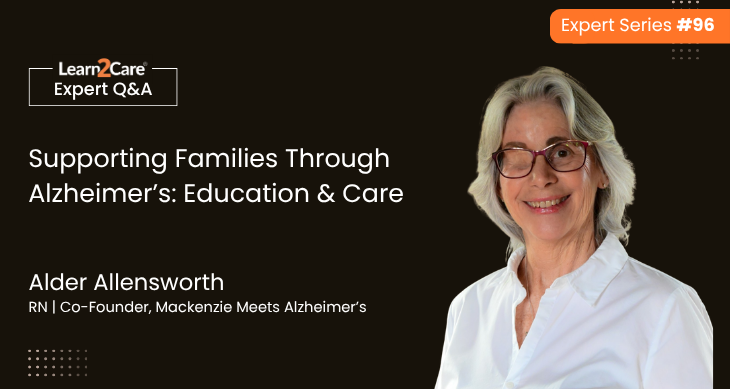
Alder Allensworth, who is a registered nurse and co-founder of Mackenzie Meets Alzheimer’s, is concerned with helping families to gain a better understanding of dementia while at the same time keeping meaningful connections with the people they love. By providing education and practical advice, her efforts prompt families to meet the challenge of Alzheimer’s with more understanding, patience and confidence.
In this conversation, Alder sets out her views on the difficulties that caregivers encounter, the common misunderstandings regarding Alzheimer’s disease, and the practical ways in which families, caregivers and communities can provide real support.
Keep reading to discover her insights.
The biggest challenge is the lack of affordable support. Caregivers are not only providing care to a loved one, but they are also trying to work, pay bills, and care for their home and family. It can be overwhelming.
The cost of hiring in-home caregivers is high, and so is the cost of placing a loved one in a residential care facility. Most families simply cannot afford either option. If a caregiver leaves the workforce to provide full-time care, it can be very difficult to re-enter the workforce later, creating additional financial and emotional stress.
One common misconception is that people living with Alzheimer’s disease are not aware of what is happening around them. In reality, they are often differently aware.
A person with Alzheimer’s disease has a brain that functions differently from a healthy brain. While many abilities are affected, some areas of the brain continue to thrive, particularly those involved in processing music and emotions. These abilities can often remain strong and can be used to enhance the quality of life.
Spending time with someone living with Alzheimer’s disease and interacting from a place of love, patience, and calm can make a meaningful difference in the lives of everyone involved.
– Alder Allensworth, RN | Co-Founder, Mackenzie Meets Alzheimer’s
Education is one of the most important ways to support caregivers, families, organizations, and communities.
There are often valuable resources available that families do not fully utilize—a neighbor willing to sit with a loved one, someone who can pick up groceries, an out-of-state family member or friend willing to provide care for a few days so the primary caregiver can take a much-needed break, or children who can include a loved one in playtime and family activities. These are examples of meaningful support that often comes at little or no cost.
Adult Day Centers can also provide social engagement and supervision at a cost that is often more affordable than residential care.
Another important step for primary caregivers is consulting with an elder law attorney. This can help ensure that financial resources are being used appropriately, and that plans are in place to meet current and future care needs.
Start by remembering that you are not expected to have all the answers. Learning about Alzheimer’s disease early can help reduce fear and prepare you for the changes ahead. Don’t be afraid to accept help from family, friends, neighbors, and community resources—caregiving was never meant to be done alone. If children are part of the family, include them in age-appropriate conversations and activities with their loved one.
They are capable of creating meaningful moments and lasting memories while learning compassion and understanding. Every act of love, patience, and connection matters, and those moments can bring comfort to both the person living with dementia and the entire family.
As Alder shared, supporting someone with Alzheimer’s or dementia starts with education, connection, and a strong support system.

Alder Allensworth is a Registered Nurse and Co-Founder of Mackenzie Meets Alzheimer’s. Alongside Brenda Freed, she created the Mackenzie Meets Alzheimer’s Awareness Program (MMAAP), a multimedia educational toolkit that helps children and families better understand Alzheimer’s disease, navigate its different stages, and maintain meaningful relationships with loved ones living with dementia through practical guidance, videos, music, and accessible learning resources.
Discover further wisdom from industry experts by exploring our curated collection of knowledge.