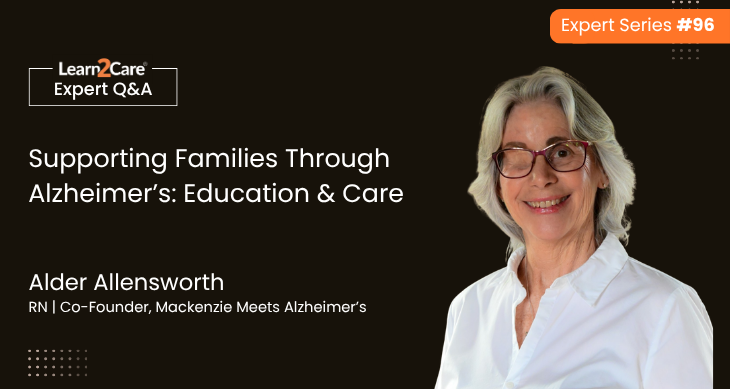
Alder Allensworth is a Registered Nurse and Co-Founder of Mackenzie Meets Alzheimer’s. Alongside Brenda Freed, she created the Mackenzie Meets Alzheimer’s Awareness Program (MMAAP), a multimedia educational toolkit that helps children and families better understand Alzheimer’s disease, navigate its different stages, and maintain meaningful relationships with loved ones living with dementia through practical guidance, videos, music, and accessible learning resources.
Senior living should involve more than just keeping residents occupied; it is about getting to know each individual, finding out what is important to them, and setting up opportunities that promote a sense of purpose, connection, confidence, and a high quality of life.
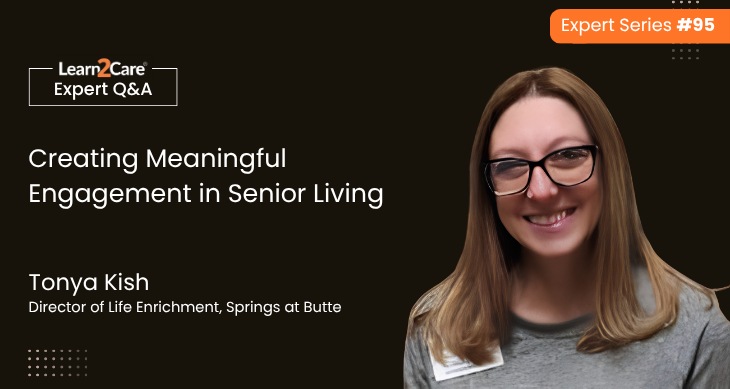
Tonya K, Director of Life Enrichment at The Springs at Butte, has over 20 years of experience in the field of senior living and in engaging with residents. Her efforts are directed towards person-centered programming, wellness, team development, and the creation of environments in which residents feel they are connected and valued.
Tonya gives some practical advice in this interview on person-centered engagement, effective mentorship, continuous staff training, providing care for people with dementia, and the things that professionals who are new to the senior living sector should remember.
Keep reading to discover her insights.
Person-centered engagement begins with learning about the individual rather than merely focusing on their diagnosis or care requirements. If we understand the resident’s background, hobbies, preferences, strengths, and the things that give them a sense of purpose, then we will be in a position to provide them with opportunities that are important to them. This could involve taking part in a group activity, teaching another resident a skill, helping with a community project, listening to some music from a significant period in their life, or having a simple one-on-one talk.
Meaningful engagement builds up a sense of connection among residents, makes them feel that they have a purpose and a place in the community, and serves to remind them that they still have something of value to offer. In the end, the aim is to help create a life that is worth living, not just to fill a schedule.
– Tonya K, Director of Life Enrichment at The Springs at Butte
In the community, we have a Safety Mentor Program which has proved to be of great value since it brings together people from various departments to serve on the Safety Committee. We have a representative from each department, and this gives us a particular advantage since safety appears to be different according to the role and responsibilities of the team member.
By offering their own departmental viewpoints, each mentor helps us to spot possible risks, exchange proven methods, and pass on safety information with their teams. This in turn establishes a culture in which safety is not the concern of a single department or individual but is something that belongs to everyone. I think that the most effective mentorship programs also foster that same feeling of connection, common responsibility, and ongoing learning.
Training must never be regarded merely as fulfilling a formal requirement. It provides employees with the chance to practice their skills, ask questions, go over the policies, and gain confidence prior to having to deal with an actual situation. I think that some of the most effective training is interactive—this involves the use of scenarios, demonstrations, drills, and real-life examples rather than depending completely on online modules.
Repetition is also important; safety becomes incorporated into a team’s culture when we continually talk about it, carry out practical exercises, and urge staff to speak up whenever they notice a concern. Employees who are confident are more likely to spot risks and take action when something doesn’t seem right.
It is very important to achieve meaningful engagement in the care of people with dementia since the focus should be on the individual rather than on the things they can no longer do. The fact that someone has been diagnosed with dementia does not wipe out their history, their personality, their interests, or their need for social connection. Through activities, people are given the chance to experience success, to express themselves, to move about, to receive sensory stimulation, and to reminisce.
The best approach is to adjust the activity to suit the individual rather than asking the individual to change in order to fit the activity. In some cases, the most significant kind of engagement needn’t be a conventional activity at all; it could simply be folding towels, listening to a favorite song, going through some photographs, helping to set the table, or having a conversation. By meeting people where they currently are, we are able to produce moments of purpose and dignity.
Before you attempt any changes, make it a point to get to know the people involved. Senior living is all about people, the relationships that exist between them, and building trust. Take the time to listen to the residents and find out their stories; likewise, listen to your colleagues as well since each person has different experiences and perspectives to contribute to the team. Don’t hesitate to ask questions, and don’t get disheartened if things don’t turn out perfectly. It is actually in the situations that challenge us that some of the most valuable lessons for this profession are learned.
Don’t forget that little things are important: a chat, a laugh, recalling someone’s favorite song, or noticing when a person needs a bit more encouragement—such moments can make a huge difference. It’s not merely about giving care or arranging activities. You are in fact helping to build up someone’s home and their standard of living. That is a responsibility, yet it is also a privilege.
As Tonya pointed out, successful senior living communities are based on relationships, meaningful engagement, and teams that keep on learning together.
Tonya K is the Director of Life Enrichment at The Springs at Butte and a resident engagement professional with more than 20 years of experience in senior living. Her work centers on person-centered programming and the eight dimensions of wellness, with a focus on creating meaningful activities, strengthening community and volunteer partnerships, supporting staff development, and building environments where residents feel empowered, connected, and supported.
Discover further wisdom from industry experts by exploring our curated collection of knowledge.