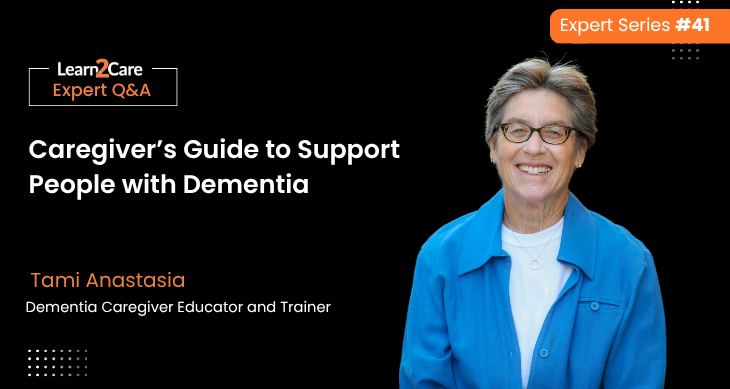
Taking care of a dementia patient may be a challenge. Caregivers should know more about the disease, cope with the behavior change, and keep their loved ones safe and well. This may be too much at times. This is why caregivers must have the appropriate assistance and aid.
We interviewed Tami Anastasia, a professional specializing in the care of Alzheimer’s and dementia. Tami gives tips and advice on how caregivers can take care of family members and, at the same time, take care of themselves.
Read on to get to know her thoughts.
Any dementia caregiver must be taught the communication skills, patience, and ability to adapt to the changes. One should be aware of the way dementia develops and the manner in which it alters the way a person thinks and behaves. Caregivers are supposed to know how to manage difficult behaviors without aggravating them.
They also have to pay attention to themselves and observe the symptoms of burnout to remain healthy. It is possible to make the process of caregiving easier and gentler by knowing how to make daily routines and find what causes stress, and by using positive encouragement.
The secret of collaboration as a family is to talk and talk a lot. Early discussions should be made in families regarding who will undertake what and what they will achieve in terms of caregiving objectives. This reduces confusion at a later stage. Host regular meetings either face-to-face or via online platforms, to update them on the current state of the patient.
The other problem is that work should be adjusted to the strengths of each caregiver. Some caregivers are more efficient in visits to physicians, whereas others are more efficient in giving emotional assistance or managing finances. A support system that is more effective is a flexible team that is centered on the needs of the loved one rather than individual differences.
The use of technology has transformed the aspect of dementia care and the training of caregivers. The wearable devices and GPS trackers can be used to ensure the safety of loved ones. Smart home and apps may remind one to take medicine or routines.
To caregivers, online classes and online support groups provide a simple means of acquiring skills and developing knowledge. Technology can also aid the caregivers to find support, get help fast, and keep abreast with care ideas.
One big problem is that caregiver training is not always personal. Every person with dementia is different, and every caregiver is different too. The majority of training provides broad concepts and might not be beneficial to the actual issues of a caregiver.
Affordable and easy-to-get help is missing for a lot of caregivers, especially in communities that don’t have many resources. Emotional support and learning how to take care of yourself often get skipped, which can leave you stressed, burnt out, or just plain sad. And honestly… some days it feels impossible, and yes, sometimes we don’t even do the little things we know would help ourselves.
I am enthusiastic about person-centered care. In this, care is personalized in terms of the history of an individual, his/her preferences, and personality. The Virtual reality (VR) training is also exciting. It allows caregivers to experience the process of having dementia, which develops sympathy and compassion.
In the future, AI might transform care by the use of chatbots to provide instructions or artificial companions. Caregivers can do better with the help of apps that facilitate arranging schedules, reminders, and progress.
Care giving is fulfilling as well as demanding. It requires commitment, sympathy, and self-care. Better practices include caregivers learning valuable skills, learning about best practices, working with useful tools, and taking care of themselves. It aims at creating a carefree and loving atmosphere among the caregivers and the people they are taking care of to enable each to perform well.
Tami Anastasia is a teacher, counselor, and consultant who provides assistance to people with Alzheimer's and other dementias. Her experience is over 30 years. She authored a book titled Essential Strategies to the Dementia Caregiver: Learning to PACE Yourself. Tami assists the caregivers individually, goes to the homes of the caregivers, conducts trainings, and supports groups of dementia caregivers. She aims to guide those working with dementia patients through the difficult side of managing it. She does this through practical tips that are easy to follow, emotional assistance, and by ensuring that the path of caregiving is not in vain.
Discover further wisdom from industry experts by exploring our curated collection of knowledge.