Home care stands as a sector ripe for receiving the innovations artificial intelligence (AI) can introduce. Introducing AI into healthcare demands a carefully considered code of ethics, which is especially true when applying it to home care. The provision of care inside a patient’s residence, unlike the circumstances one finds within hospitals, often lacks direct oversight.
To examine what shapes the design and management of ethical AI in day-to-day home care operations, we’ll look at established ethical standards, research findings, and real-world caregiving examples.
Ethical AI in home care means AI helps caregivers, but they still make the final decisions while providing care. Since home care deals with personal info, differences in power, and less oversight, being ethical with AI is key. When AI follows ethical rules, it can make care safer, more reliable, and build better trust.
Who Should Read This?
In home care, ethical AI can give caregivers tips, reminders, and training. But it shouldn’t replace human judgment. It protects client info, doesn’t automatically decide on care, and keeps caregivers responsible.
Home care isn’t like a hospital setting. In home care, you’re not under constant supervision, and each client’s home is different. People prefer things done according to their wishes. Each home is unique.
Here are some things that make AI ethics super important in home care:
With all this in mind, AI used in home care needs to stick to higher ethical standards than AI in hospitals.
Ethical AI should:
Ethical AI must not:
This way helps handle the most common ethical worries about AI, like things being too automated, not being upfront about how it works, and not having enough people to be responsible.
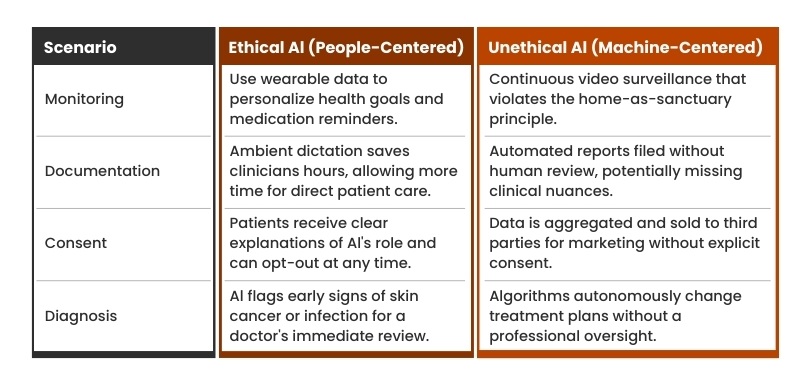
Caregivers or supervisors should always double-check what AI suggests. Letting AI change care plans on its own goes against what’s right in home care.
Caregivers and families need to know how AI systems do their thing, why they suggest stuff, and what they can’t do. Being clear on all this builds trust.
Home care info is very personal. Ethical AI needs clear permission to gather information, should only grab what it needs, keep it locked up tight, and have rules about how long to keep it around.
Agencies need to say who’s running the AI show, including training and results. This keeps both caregivers and clients safe.
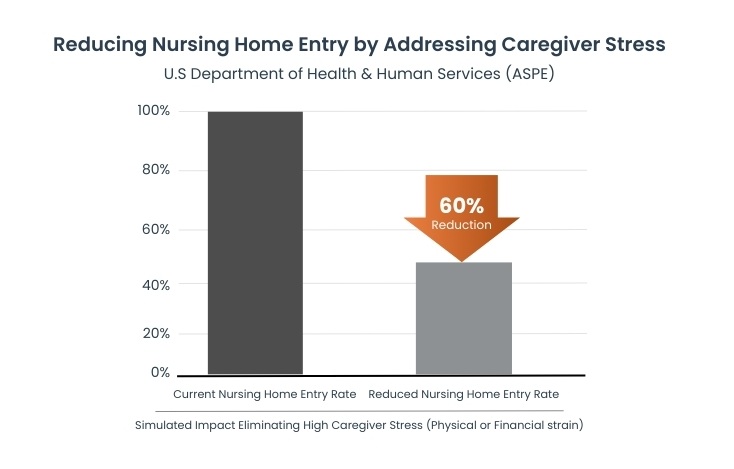
If people aren’t trained well, even an ethically designed AI system can crash. Training caregivers is key to making sure AI is helping care, not messing it up.
Proper caregiver training program covers:
Learn2Care uses caregiver training tools to support learning, safety, and confidence without replacing human judgment or real-world care. Our AI features are built only to assist training and education, never to make care decisions.
The AI Care Companion supports caregivers during training by explaining best practices and helping caregivers understand why care steps matter. It does not give medical advice or make decisions.
The AI Care Coach helps caregivers build skills through learning guidance and reflection questions. It encourages confidence and good judgment without directing real-world care.
The AI Course Builder helps agencies create structured caregiver training content. All courses are reviewed and approved by human experts before use.
AI Wellbeing Check-Ins help caregivers reflect on stress and burnout. They support wellbeing without tracking performance or collecting private client data.
In-home care is a very personal thing, so ethics are super important, mainly when using AI. When AI is ethical, care can be safer, more reliable, and more caring. Tech should protect people, and ethical AI helps make that happen.
What’s ethical AI in-home care?
AI is ethical if it helps caregivers but values human wisdom first. It keeps data private and respects those getting care.
Will AI replace caregivers?
No. Ethical AI makes care better. It won’t replace human understanding or kindness.
What are the main ethical concerns?
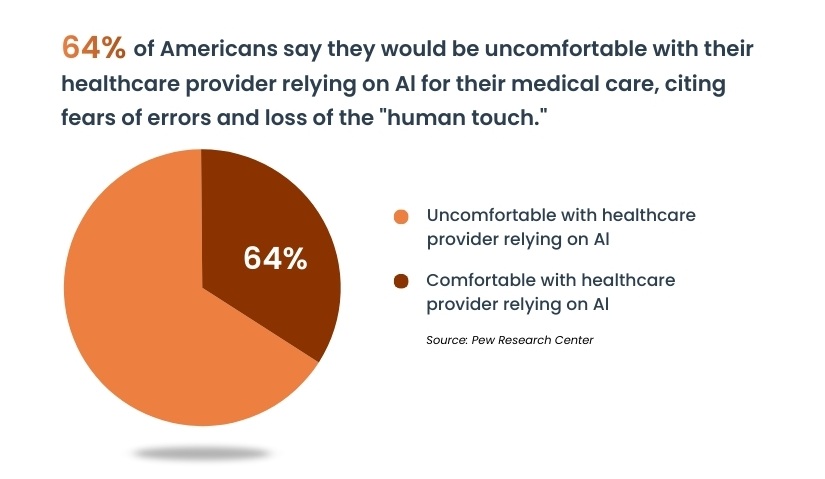
The biggest concerns are keeping data private, mistakes, confusing information, knowing who’s in charge, and too much automation.
How does ethical AI respect clients?
By getting permission, collecting only needed data, and avoiding automatic decisions about personal care.
Why is training important?
Without training, caregivers might rely too much on AI or misuse it. Training makes sure AI helps, instead of replacing skilled thinking.
Related Blog Posts-
Generative AI in Home Care- Improving Home Care Experience and Support
The Future of AI vs. Human Intuition: Can AI Replace Caregivers?
Find your next read and expand your knowledge
Contact us to inquire about our state-wise training courses and take the first step towards upskilling your team with a 14-day free trial!