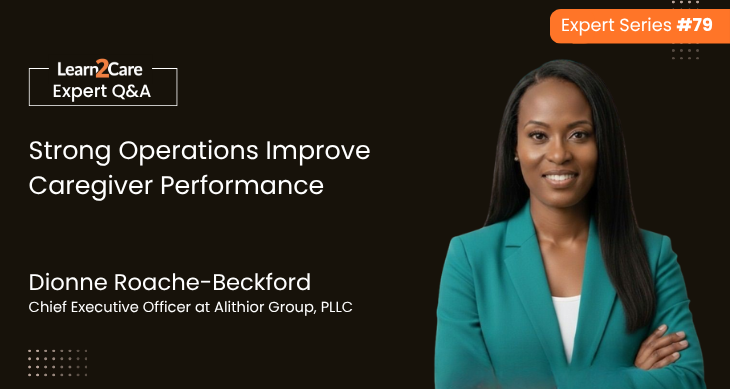
How home care agencies want to grow and take care of more patients—but sometimes things get messy. Things like slow intake, confusing schedules, or missing paperwork make caregivers tired, patients wait too long, and money doesn’t come in on time. To shine more light on this, we chatted with Dionne Roache-Beckford. She is a nurse practitioner with over 17 years of experience, a former home-care agency owner, and now the founder of Alithior Group. Here’s what she shared:
Operational gaps create cognitive overload. When workflows are unclear, communication is not consistent, and support is not organized, decision fatigue goes up, and performance becomes reactive instead of steady. An effective operation system maintains robust clinical judgment and funds healthy.
Intake and internal communication. Most agencies try to grow before they make sure information flows smoothly from referral and scheduling to care delivery. Poor clarity at intake puts an extra burden on all the steps that come after. Building this strong base improves staff retention, following rules, and predictable revenue.
Clear intake rules and well-organized schedules cut down last-minute chaos. Stress goes down when caregivers know what is expected, have realistic caseloads, and are matched well to patients. Burnout is more a sign of unstable systems than a weakness in the workers.
Documentation protects both clinical care and financial matters. Accurate documentation ensures care continues smoothly, maintains reimbursement integrity, and lowers the risk of audits. Wrong or missing records create legal risk and slow down the flow of revenue.
Build a strong infrastructure first and then focus on expansion. Scaling when operations are unclear makes problems bigger. Before increasing census, leaders need to set up clear workflows, decision paths, communication rules, and ways to hold people accountable. Growth should not put too much strain on stability.
As Dionne Roache-Beckford shared, when new patient sign-ups happen fast and easily, schedules are smart and fair, and all the paperwork gets done correctly, patients feel safe and get good, steady help every day. Caregivers don’t get tired and upset so quickly. The whole home care company works better and feels calmer. The real fix starts by improving those normal daily jobs first.

Dionne Roache-Beckford, MSN, AGACNP-BC, is the founder of Alithior Group, PLLC. This healthcare operations company gives virtual assistant services to home care, home health, hospice agencies, and healthcare practices.
She is a board-certified Adult-Gerontology Acute Care Nurse Practitioner with more than 17 years of experience and was once the owner of a home-care agency. She knows that operations are connected to care. They affect patient results, financial stability, and team strength every day.
Every workflow affects the patient, the caregiver, and the organization. All of them need stability, steady care, and financial health.
Healthcare organizations usually do not have trouble because of too little demand. They struggle because growth puts more pressure on weak operations.
Discover further wisdom from industry experts by exploring our curated collection of knowledge.